New Jersey starting point
$150,000
Up to 100 women · 12 months
A proposed education and follow-up demonstration, beginning with women affected by hypertension in pregnancy, including NICU mothers.
See the itemized planning budget →For members of Congress and their staff
Our goal: pregnancy history remembered, a clear next step and appropriate follow-up completed, from postpartum through midlife and menopause.
The first step: a 20-minute staff conversation. Identify a health-policy contact and one practical introduction to move the proposal forward.
Founded by Lisa Zahakos, RPA-C · Independent proposal · Congressional briefing updated October 28, 2026.
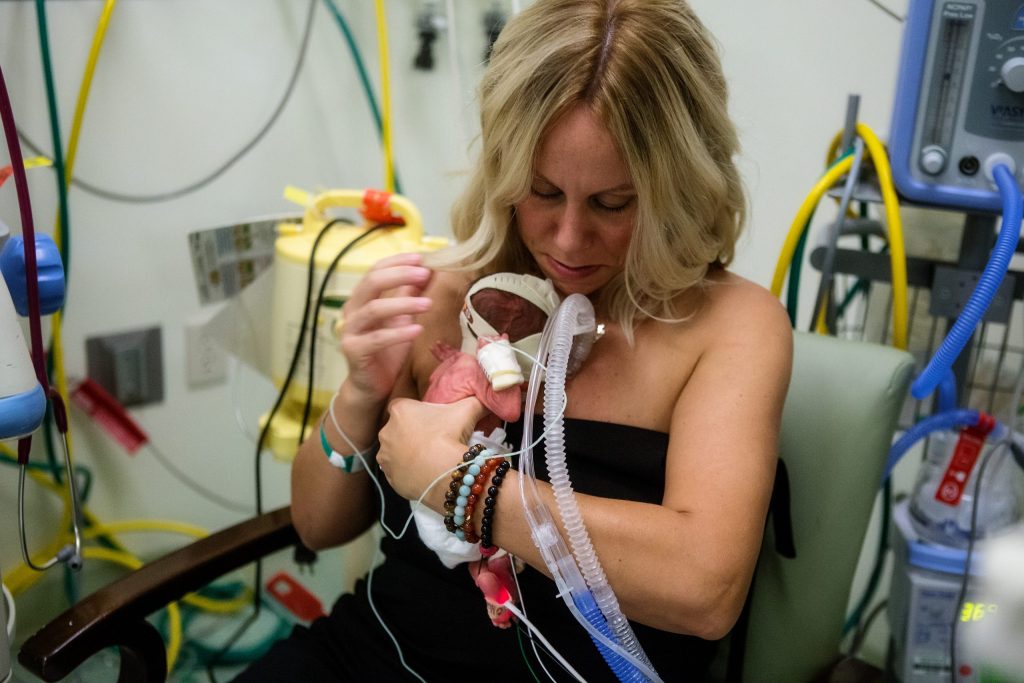
My babies needed care.
So did I.
ASK. RECORD. RESPOND. Ask about pregnancy. Keep it in the health record. Connect indicated follow-up to a clinician and confirm completion.
The proposal in one minute
The immediate request is a 20-minute staff discussion: identify the right health-policy contact, explore one clinical or agency introduction, and agree on a next action with an owner and date.
New Jersey starting point
$150,000
A proposed education and follow-up demonstration, beginning with women affected by hypertension in pregnancy, including NICU mothers.
See the itemized planning budget →National planning scenario
$1.2 million
The first-year national scenario includes New Jersey’s $150,000. Expansion depends on willing hosts, capacity, funding and evaluation.
Review the national proposal →Measure the follow-through
History → care
Measure recorded pregnancy histories and completed indicated follow-up, together with patient understanding, access barriers, staff workload and cost.
See the evaluation approach →Planning status: partners, funding and institutional approvals remain to be secured. The first discussion asks for guidance and connections; it does not ask an office to commit funding or endorse HEART RESERVE. Risk-model development and clinical software require separate studies and budgets.
A practical first yes
Review the one-page brief and identify the staff member responsible for maternal or cardiovascular health.
New Jersey offices can help convene the proposed local working session. Other offices can introduce a state maternal-health lead or an appropriate federal program contact.
Choose a next meeting, introduction or agency inquiry, with a named owner and date. Clinical partners would determine care decisions and feasibility.
This initial request does not require an office to endorse the campaign or commit funding.
Leave with one concrete next step: an action, a responsible contact and an agreed follow-up date.
Available now · Free appointment preparation
Open the current Heart Story on the main HEART RESERVE site. It brings a woman’s life-course history, results, questions and care-team instructions into one editable visit summary.
Current capability: a personal organizer and educational resource. Entries are not sent to HEART RESERVE or a care team. Naming a clinician does not notify that clinician. The tool does not monitor readings, send reminders or confirm completed care; those services remain proposed.
Every state has a place
Use the published comparison to start a local conversation, then explore the state’s proposed pathway and congressional resources.
Commonwealth Fund, 2024 State Scorecard on Women’s Health and Reproductive Care, Appendix B2. Ranks include 50 states plus DC; 1 is best, 51 is lowest, and published ties are retained. The report generally uses 2021–2022 data. This is a broad women’s-health index, not a maternal heart-health or campaign-performance ranking.
FOUNDER & PROPOSED CAMPAIGN LEAD
Clinical experience. A NICU mother’s perspective. A record of community action.
Lisa’s 2003–2018 clinical practice included cardiology, preventive medicine and behavioral health. Her sons Peter and Maurice’s fetal surgery, early birth and NICU stays led to family advocacy and, later, HEART RESERVE.
Her current work includes patient education, published writing, case-based clinician education development and a project-specific Associate Editor role with the HEART RESERVE Project / CardioSmart, American College of Cardiology. As founder of Sew Away Corona, she also organized volunteers, supplies and distribution to support frontline workers and communities.
For this proposal, Lisa would lead education, public engagement and partner coordination, with clinical and community partners responsible for medical review, care delivery and evaluation.
The clinician education program remains in development. Editorial and publication credits do not imply institutional endorsement of this independent campaign.
Our goal
Make pregnancy history a lasting part of every woman’s heart care, from postpartum through midlife and menopause, so she understands her history, knows her next step and can reach the care she needs.
Our long-term aim is fewer missed opportunities for prevention and better heart health for women.
A portable Heart Story helps a woman bring her pregnancy history and questions to a clinical visit, even years later.
Agree on the next action, receiving clinician and due date. Help address scheduling, language, coverage and other access barriers.
Confirm whether indicated care was completed or the clinical plan changed. Measure missing care and barriers alongside successes.
The first test. Begin with a proposed New Jersey demonstration: up to 100 women over 12 months, with a $150,000 planning budget. Start with women affected by hypertension in pregnancy, including NICU mothers. Partners would agree a baseline and measure completed follow-up, patient understanding, access and cost. These are proposed programs, not achieved outcomes.
Test whether pregnancy and reproductive history improve cardiovascular prediction and can support a validated risk-equivalent heart-age tool. This remains separate research; no HEART RESERVE pregnancy-adjusted score is clinically validated.
See what the research would test →Founded by Lisa Zahakos, RPA-C. Her clinical experience and her sons’ fetal surgery and NICU stays inform this independent campaign.
Government briefing · October 27, 2026
Proposed federal next step: seek an HHS coordinating contact and a working session to identify an eligible lead, an appropriate funding route and conditions for an evaluated demonstration.
Five proposed states. Up to 500 women. Twelve months. A $1.2 million planning scenario that already includes New Jersey’s $150,000 education pilot.
Proposed, subject to clinical partnership and funding. The education demonstration and risk-model research have separate aims. See the national budget · New Jersey meeting brief
Two distinct requests
Campaign / implementation
Support a reviewed education and care-transition demonstration: ask about pregnancy, record the history, and name the clinician and next step. Evaluate whether indicated follow-up is completed.
The proposed New Jersey starting point is a 12-month, up-to-100-woman, $150,000 planning scenario. The national proposal describes a separate five-state expansion scenario that includes New Jersey.
Review the pilot and budget →Research / separate study
Help connect HEART RESERVE with qualified investigators, longitudinal data and an appropriate research funding route. Study whether pregnancy and reproductive history add useful information beyond current measurements.
The candidate has no fitted clinical coefficients or validated pregnancy-adjusted risk age. Model development, external validation and patient-use evaluation need their own protocol and budget.
What the calculations use and leave out →The New Jersey case
New Jersey has invested in maternal health. These data show why the work must continue—and why the heart-health conversation needs to reach families beyond a single hospital.
24.8 deaths per 100,000 live births, using 2020–2024 data. Rank 1 is best; 47 states are ranked.
America’s Health Rankings ↗Pregnancy through 42 days after its end. This is not a postpartum-only ranking.In the NJ review for 2019–2023, cardiovascular conditions and COVID-19 were tied at 19.4%; other infections accounted for 15.3%.
NJ Department of Health ↗Pregnancy-related deaths during pregnancy or within one year. Uses the state update’s cause categories.The NJ committee found a chance to prevent most pregnancy-related deaths in its 2019–2023 review.
NJ Department of Health ↗Preventability is a review finding, not an estimate of what this education campaign alone could prevent.The state’s detailed 2019–2021 report contains 61 pregnancy-related deaths. Six were cardiovascular conditions and five were cardiomyopathy: 11 combined, or 18.0%. That count includes pregnancy through one year after pregnancy; it is not a postpartum-only cardiac count. The newer 2019–2023 press release reports percentages, so this older exact count is labeled separately.
COVID-19 was the largest single category in this pandemic-period report. The different periods and category definitions should be considered when interpreting these figures.
Why a national campaign must continue after discharge
In CDC’s 2022 MMRC data, cardiovascular conditions accounted for 129 deaths, including 54 cardiomyopathy deaths—16.6% of deaths with a known cause. Mental health conditions were the largest category at 27.7%. A heart-health campaign should connect families to the full maternal safety system.
CDC MMRC dashboard · 2022 selected · released April 2026 ↗These are deaths reviewed by participating committees, not a complete count of all US deaths. Source years and definitions differ from the New Jersey figures above.
A PROPOSED FIRST YEAR · OCTOBER 26, 2026
A 12-month New Jersey education and follow-up demonstration, with a planning capacity of up to 100 women. Start with women affected by hypertension in pregnancy, including mothers whose babies are in the NICU. Clinical partners would confirm eligibility and the care pathway before enrollment.
Three months to prepare, six to introduce the workflow, three to complete evaluation.
Across up to six proposed clinical and community hosts in North, Central and South Jersey.
Illustrative planning budget for this education and follow-up scenario. No funding is committed.
Arrange a 20-minute staff conversation and identify a health-policy contact. New Jersey offices could help convene a working session with prospective clinical and community partners. Offices elsewhere could connect the proposal with maternal-health caucus work, federal education programs or interested partners in their states.
The working session would produce a named clinical lead, a short list of willing hosts, an agreed evaluation plan and a revised budget. Please contact lisazahakos@gmail.com.
Seek written expressions of interest from hosts and a fiscal sponsor or eligible lead organization. Pay community advisers for design input. Confirm clinical review, referral capacity, language access, baseline measures, budget and any required quality-improvement or research approvals.
Offer a short teaching conversation, a pregnancy-history record and a visit card with a named maternal clinician and due date. A designated navigator checks scheduling and access barriers. Clinical teams decide the urgency and timing of care; an infant’s NICU stay must never delay maternal follow-up.
Complete the defined follow-up window, review missed visits and compare care-process measures with the agreed baseline. Publish an aggregate report with costs, reach, completion, patient feedback and lessons for the next phase. Recruitment and observation dates must allow adequate follow-up before analysis.
| Proposed role | Responsibility | Status |
|---|---|---|
| Lisa Zahakos, RPA-C / HEART RESERVE | Education, parent engagement, partner coordination and campaign delivery. | Proposed project lead. |
| Clinical lead and participating care teams | Medical review, eligibility, treatment decisions, referrals and response to clinical concerns. | To be confirmed in writing. |
| Community hosts and care navigator | Paid family input, trusted outreach, language access, scheduling and practical barriers. | To be recruited and resourced. |
| Evaluation team and fiscal lead | Baseline and outcome definitions, approved data handling, analysis, contracts and financial reporting. | To be confirmed before launch. |
These are proposed allocations, not vendor quotes or approved awards. Final staffing, rates, host capacity and allowable costs must be agreed with the participating organizations and funder.
| Work | Planning allocation |
|---|---|
| Program coordination and education delivery, including proposed founder time | $27,000 |
| Clinical review and workflow development | $30,000 |
| Care navigation and follow-up coordination | $30,000 |
| Evaluation and data management | $24,000 |
| Paid community advisers and language access | $18,000 |
| Materials, training and accessibility review | $12,000 |
| Fiscal administration and contingency, subject to funder rules | $9,000 |
| Total proposed planning scenario | $150,000 |
This estimate covers program delivery and evaluation. Clinical visits, diagnostic testing, treatment, device purchases, new software development and a national media rollout are outside this estimate. Access to clinically indicated care and a sustainable payment route must be established before recruitment.
Proposed care-process targets: 90% with relevant pregnancy history documented; 90% of those needing follow-up with an owner and due date for each indicated step; 80% of due follow-up actions confirmed completed by the treating team’s recommended date. Report separately the proportion of women whose entire due plan was completed. These are planning targets, not results or clinical standards.
Agree the eligible denominator and baseline before launch. Report missing data and losses to follow-up. Review access and completion by race, language, insurance and geography where numbers allow privacy-preserving reporting. A small pilot can assess feasibility; it cannot establish lower mortality or long-term cardiovascular benefit.
This page presents a proposed $150,000 education and follow-up demonstration for up to 100 women over 12 months. Earlier outreach also described a separate $195,000 technology feasibility concept for approximately 50 women, with up to 90 days of individual support. The estimates represent different scopes and should not be added together or used interchangeably. Any technology study would need its own protocol, clinical oversight, approvals and budget.
The broader pregnancy-to-midlife campaign and risk-prediction research remain separate workstreams. No named institution is represented as a committed pilot site. Written partner interest and approved responsibilities are the next evidence needed.
EQUITY + GEOGRAPHY + A MEASURABLE PILOT
Black maternal health equity should shape the first pilot. The community plan brings together regional mortality data, named NJ priority cities, existing local networks and a proposed 12-month evaluation.
The request to your office
Help make “Pregnancy history is heart history” a message families hear during pregnancy, after birth, and throughout adult care—with a practical route to follow-up after pregnancy and through midlife.
Host a bipartisan congressional briefing with maternal-health clinicians, cardiology, NICU and lactation teams, parents, public-health leaders, and organizations already doing this work. Put family experience and continuity of care at the center.
Ask HHS, CDC, and HRSA to explore how pregnancy-history and maternal heart-health education could fit within existing maternal-health programs. Use HEART RESERVE’s pregnancy-history message and visit materials alongside established educational resources. Ask partners to review them against the October 26 multi-society guidance, connect the message to local receiving clinicians, and support accessible, multilingual delivery.
Help identify clinical partners and appropriate funding pathways for a New Jersey demonstration with a plan for broader, multi-state evaluation. Agree on scope and budget with participating sites before setting enrollment or expansion targets.
Encourage research on documenting pregnancy history, improving follow-up, and testing whether pregnancy variables add value to cardiovascular prediction. Updating a validated equation requires scientific development and validation.
These are proposed requests for congressional consideration, not committed federal actions or funding.
The first place to make it useful
Your baby has a care plan. You deserve one, too. The NICU module gives the campaign one practical starting point. Primary care and midlife visits create further opportunities to bring pregnancy history back into care.
Offer education during the NICU stay, reinforce it in lactation visits, and revisit it at discharge. A long infant admission must never delay the mother’s time-sensitive postpartum care.
New Jersey, other states & international lessons
Use existing services, then measure whether women reach the care they need. These examples compare specific programs and outcomes, not entire health systems.
| Example | What already exists or was demonstrated | What this campaign can add |
|---|---|---|
| New Jersey services | NJ FamilyCare offers eligible members 12 months of postpartum coverage. Family Connects NJ lists 17 counties in its January 2026 phase, with four more planned for January 2027. | A pregnancy-history record, a named care contact and confirmation of indicated follow-up. Coverage and local service access must be checked. |
| New Jersey MOPP | Hypertension-related ED visits: 3.6% versus 8.4% with a tight-BP-management and remote-monitoring intervention, compared with a retrospective cohort. | Connect education to a clinician-owned monitoring and response pathway. The study does not establish a mortality benefit. |
| Pennsylvania UPMC | Remote postpartum hypertension monitoring was associated with fewer readmissions in an observational cohort. | Plan response staffing and follow-up alongside the device. Association alone does not establish causation. |
| UK POP-HT | A randomized trial of 220 women found systolic BP lower by 6.5 mm Hg at about nine months with supported self-monitoring and treatment. | Evaluate completed care and clinical measures. A single-center BP result does not prove fewer deaths. |
| California collaborative | Severe maternal morbidity among hemorrhage patients fell from 22.1% to 18.5% across 99 hospitals. | Use consistent workflows and assess differences in access and outcomes. These are hemorrhage results, not cardiac mortality results. |
| Australia | Heart Foundation education connects pregnancy complications and menopause with cardiovascular risk. | Carry the same history from postpartum care into midlife. Education alone is not evidence of improved outcomes. |
Read the studies, coverage details and postpartum pathway → · Open the referenced evidence appendix ↗
Use CDC Hear Her and AWHONN POST-BIRTH alongside local discharge teaching. These are references and complementary resources, not confirmed campaign partners.
A path to national reach
A proposed sequence, subject to clinical partnership and resources. The goal is a repeatable education and follow-up process that can work across different communities.
Establish clinical ownership and parent input. Review medical content, accessible formats, translations, referral pathways, and responsibilities for responding to symptoms or abnormal readings.
Introduce the family guide in agreed care settings. Connect teaching to a real appointment and a named maternal clinician. Confirm staff capacity, local workflow, and quality-improvement or research requirements.
Measure understanding, documented pregnancy history, appointment scheduling and completion, referral completion, and family and staff experience. Use findings to revise the program before broader multi-state implementation.
Track whether people reach care, not just how many handouts are distributed. Review language access, cost, transportation, childcare, and time away from the NICU. Include families facing the greatest barriers in design and evaluation.
Early evaluation can establish feasibility and care-process changes. It cannot establish a reduction in mortality or long-term cardiovascular events. Clinical data would remain within partners’ approved systems; this public website collects no patient information.
What success means
Among participating women for whom a clinician recommends follow-up, measure the proportion who complete that follow-up by the recommended date. Pair this with the proportion whose relevant pregnancy history is documented in the clinical record.
Assess understanding before and after teaching, appointments scheduled, barriers resolved, referral completion, and family and staff experience. Review results by life stage and access needs. Views and downloads measure reach, not clinical benefit.
Set baseline measures, targets, recruitment, budget, and data agreements with clinical partners before launch. Longer-term studies can examine risk-factor management; a small educational demonstration cannot establish a mortality reduction.
The next research question
Education can move forward while a separate research program evaluates whether detailed pregnancy history improves cardiovascular risk assessment and care decisions. The independent HEART RESERVE candidate would fit its own coefficients. Established tools would serve as appropriate comparators; their published equations would not be altered.
| Model | What it estimates | Pregnancy history & limits |
|---|---|---|
| US PREVENT | Cardiovascular risk, including heart failure, using cardiovascular, kidney, and metabolic measures. Ten-year estimates for ages 30–79; 30-year estimates for ages 30–59 in eligible adults without known CVD. | Preeclampsia, gestational diabetes history, and preterm delivery are not direct equation inputs. AHA recommends considering adverse pregnancy outcomes alongside the result. It does not assess acute postpartum emergencies. |
| UK QRISK3 | Ten-year cardiovascular risk for ages 25–84. Includes traditional factors plus ethnicity, deprivation, family history, kidney disease, migraine, inflammatory conditions, severe mental illness, and certain medications. | No dedicated inputs for preeclampsia, gestational diabetes history, or preterm delivery. Current diabetes is included; past gestational diabetes is a different variable. Developed for UK populations. |
| UK QR4 | A newer model developed and externally validated using UK health records. Adds predictors including preeclampsia and postnatal depression. | Does not provide a comprehensive pregnancy-history assessment. UK validation does not establish accuracy for a US postpartum population. NICE’s cited guidance specifies QRISK3. |
How pregnancy, midlife and risk assessment fit together →
Separate research pathway
Technical reliability and usability, a later clinical implementation study, and risk-prediction research answer different questions. Investigators would need to define the population, data access, oversight, evaluation and budget for each.
Review the current research status ↗Research discussions do not establish an institutional partnership, an approved study, secured funding or clinical validation.
With an academic clinical and biostatistics team, define the population and outcome, obtain longitudinal data with appropriate approvals, and compare the independent model with suitable established tools and with a model refitted without pregnancy information. Assess calibration, discrimination, usefulness for care decisions, and performance across patient groups in independent data.
Pregnancy history can be clinically important even when it adds only modest prediction gains. A 2025 postpartum study found limited overall improvements after adding pregnancy factors to QRISK3, with improvements in selected subgroups and decision-curve measures.
Heart age also needs accurate labeling: AHA now provides PREVENT-Age. It describes equivalent predicted risk, not a measurement of biological aging. A pregnancy-adjusted risk age would need separate validation.
PREVENT, QR4, NICE, and the postpartum study ↗Campaign kit
Proposed distribution: NICU welcome materials, lactation visits, maternal discharge teaching, the infant’s discharge packet, and partner social channels. Clinical teams would review the material before use.
Your baby has a care plan. You deserve one, too.
Ask about your pregnancy history, your recovery, and your next appointment. HEART RESERVE’s pregnancy-to-midlife guide helps you bring the right questions to your care team.
Pumping is work. You deserve support.
If feeding has been harder after a complicated pregnancy or an early birth, ask your lactation and medical teams for help. Your recovery and your feeding goals belong in the same conversation.
One question before you leave: who is following up on you?
Write down your clinician, your next appointment, and what symptoms need urgent care. Pregnancy history is heart history—even after your baby comes home.
I’m Lisa Zahakos, a physician assistant and NICU mother. When your baby is in intensive care, it can be hard to make space for your own health. Pregnancy history is heart history. Our guide helps you remember what happened during pregnancy, ask for feeding support, and leave with a follow-up plan for you.
A message worth carrying nationwide
Congressional offices can help bring this conversation to a national audience: convene the stakeholders, explore a federal education pathway, and support an evaluated New Jersey starting point.
A proposed first meeting: agree on a congressional briefing, identify clinical and community voices, and define the first demonstration’s scope and funding options.
NEW JERSEY CARE, COVERAGE & EVIDENCE
Explore NJ FamilyCare, Family Connects NJ, the Rutgers postpartum blood-pressure study, insurance coverage and lessons from other states and countries.
See the evidence and improvement plan ↗One campaign · Every state
Find your state's discussion brief, public-health resources and a one-page download. Start with a local conversation about pregnancy history and follow-up care.
State briefs invite collaboration. The first proposed demonstration remains in New Jersey.