Heart Story
A public visit-preparation organizer for history, questions and follow-up notes.
Start my Heart StoryHEART RESERVE · A national campaign proposal
Pregnancy history is heart history.
Help women carry their history into lifelong heart care—with a clear next step and follow-through, from pregnancy and postpartum to midlife and menopause.
Read the national brief ↓Discuss a partnership →Full national proposal ↓
Founded by Lisa Zahakos, RPA-C · Proposed rollout; participation is not yet committed.
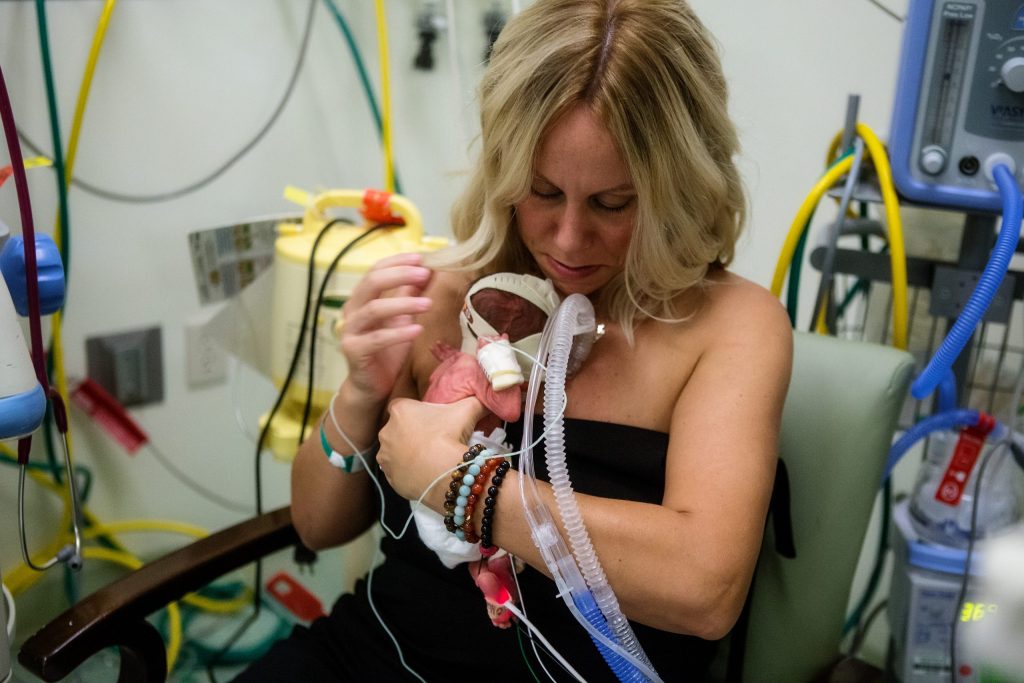
My babies needed care.
So did I.
One message.
Every community.
THE PLATFORM WE ARE BUILDING
HEART RESERVE is developing a women’s cardiovascular follow-through platform. The first use case connects pregnancy-informed history with clinician-reviewed next steps and the transition into ongoing care.
CALM, CLEAR, PERSONAL
One place to understand the plan, know who can help, and see what still needs attention.
Start my Heart StoryA SHARED WORK QUEUE
Review the reason for each proposed step. Accept, revise or decline it with a documented rationale. Assign an owner and timing, then track the evidence and resolution.
Try the existing fictional team workflow →A MEASURABLE OPERATING MODEL
A hospital would evaluate completion, unresolved needs and staff effort against its existing workflow. Results would inform a decision to continue, revise or stop.
Review the proposed measurement definitions →These views explain the intended product. They do not display patient records or live program results. The linked workspace uses fictional examples; institutional use still requires validation and deployment controls.
PROOF BEFORE SCALE
A public visit-preparation organizer for history, questions and follow-up notes.
Start my Heart StoryThe existing platform preview illustrates woman, care-team and program perspectives using synthetic examples.
Inspect the preview →Verified access by role and institution, audit records, privacy and security review, approved integrations, support and clinical governance.
Independent workflow testing, appropriate follow-up, completion, staff burden and a buyer’s willingness to pay. Clinical benefit and savings remain unproven.
Shared core: one maintained product, versioned evidence rules, clinician review, accepted responsibility, due dates, evidence and resolution history.
Local configuration: eligible population, roles, escalation routes, language and branding. A second institution should be onboarded through a documented process, with its own access boundaries.
Proposed commercial model: annual institutional licensing, defined implementation and support, and expansion to additional programs after evidence of value. Pricing, contracts, recurring revenue and renewals are not established by this proposal.
Buyer diligence: demonstrate code and IP rights, security and privacy controls, clinical governance, service responsibilities, implementation cost and measurable performance before contracting.
The existing $150,000 New Jersey and $1.2 million five-state figures are education and navigation planning scenarios. The national figure includes New Jersey. They are not software license prices, a production platform quote or secured funding.
Enterprise development, institutional implementation and risk-model research need their own costed scopes, qualified teams and approvals. No clinical deployment or government procurement is implied by the public demonstration.
Our goal
Make pregnancy history a lasting part of every woman’s heart care, from postpartum through midlife and menopause, so she understands her history, knows her next step and can reach the care she needs.
Our long-term aim is fewer missed opportunities for prevention and better heart health for women.
Use plain-language education and a short Heart Story. Ask her to explain the next step in her own words; a download alone does not show understanding.
Help clarify uncertain diagnoses. With her permission, carry the history into the receiving team’s approved record and confirm who owns follow-up.
Address scheduling, language, transport, childcare and coverage barriers. Confirm completed care, a clinician-revised plan or an unresolved need.
The first test. Invite all 50 states to learn. Begin implementation in five willing states, including New Jersey: up to 500 women over 12 months, with a $1.2 million planning scenario that includes the $150,000 NJ pilot. Partners would agree a baseline and measure completed follow-up, patient understanding, access and cost. These are proposed programs, not achieved outcomes.
Test whether pregnancy and reproductive history improve cardiovascular prediction and can support a validated risk-equivalent heart-age tool. This remains separate research; no HEART RESERVE pregnancy-adjusted score is clinically validated.
See what the research would test →Founded by Lisa Zahakos, RPA-C. Her clinical experience and her sons’ fetal surgery and NICU stays inform this independent campaign.
Pregnancy history is heart history
Heart health belongs in conversations about periods, pregnancy, menopause and the years that follow. Bring your earlier history into today’s care, together with what has changed and what matters to you now.
Bring questions about menstrual patterns, sleep, activity and emotional well-being into routine care.
Questions for a visit →Discuss cycle changes and pregnancy plans. If you have been pregnant, keep each pregnancy’s history available.
Questions for a visit →Bring changes in periods, sleep and symptoms together with earlier pregnancy history for a heart-health review.
Questions for a visit →Keep pregnancy and menopause history in the record as prevention, symptoms and follow-up needs change.
Questions for a visit →Pregnancy is a life event, not a separate stage. Its effects may matter before, during and after pregnancy, and the history remains relevant in later care. Record what happened and revisit it as your health changes.
One broader educational home. A focused first demonstration. Pregnancy history remains the entry point for the proposed pilot. This guide does not expand planned enrollment or budget, or establish a clinical care service. Partner agreements, clinical review, funding and approvals remain outstanding.
Government briefing · October 26, 2026
The federal decision: convene an HHS-led working session and identify an eligible lead and funding route for an evaluated demonstration.
Five proposed states. Up to 500 women. Twelve months. A $1.2 million planning scenario that already includes New Jersey’s $150,000 education pilot.
Proposed, subject to clinical partnership and funding. The education demonstration and risk-model research have separate aims. See the national budget · New Jersey meeting brief · Explore the NJ hospital pathway
Where we are now
Lisa confirms that Dr. Quintero has offered his cohort as a potential research starting point. A Rutgers discussion is scheduled for October 28, 2026 to explore the right expertise and next steps. A completed meeting or research agreement is not confirmed here.
The immediate task: define the available maternal data, a feasible study question, the investigator and statistical support, and the access and approval process.
No hospital partner is secured. The New Jersey hospital pilot and five-state demonstration below are future proposals. Their participant targets and budgets do not describe the offered cohort or an active study.
The next research conversation →FIVE GOALS · A PRACTICAL DELIVERY PLAN
Our first job is to help women carry pregnancy history into ongoing care. National awareness opens the door; local clinical teams and community partners make the next step possible.
| Goal | How we address it | Who leads | What we measure |
|---|---|---|---|
| 1. Make the connection understood | Share one consistent message through maternity care, NICUs, primary care and community hosts. Offer reviewed paper, digital and translated materials. | HEART RESERVE education lead with paid patient advisers | Whether women can explain why their history matters and identify their next step; reach reported separately. |
| 2. Keep the history in the record | Capture relevant pregnancy history, its source and what remains uncertain. Ask the clinical team to review it and carry it into ongoing care. | Participating clinical teams | Clinically reviewed history recorded: proposed 90% of enrolled participants. |
| 3. Close the gap after referral | Name the receiving clinician and confirm acceptance of the handoff. Record the action, due date and timing basis. Track completion, result review and resolution separately. | Receiving clinician and designated navigator | Proposed 90% with an owner and due date for each indicated step; 80% of all due follow-up actions confirmed completed on time. Use the definitions below. |
| 4. Make care reachable | Ask about access barriers privately. Offer phone and paper routes, qualified language support and connections to existing local assistance. | Community partners and hospital navigation team | Barriers identified and resolved; who was offered participation, who participated and who completed care. Report missing outcomes and protect small groups. |
| 5. Earn national expansion | Start in willing, prepared settings; compare with baseline, review costs and workload, and publish what worked and what did not. | Independent evaluator and accountable fiscal lead | Feasibility, patient understanding, completed care, staff burden and cost. Expand only after an agreed review. |
All targets are planning proposals to agree with partners before enrollment. The first demonstration cannot establish fewer deaths or validate a prediction model. Better long-term heart health is the ambition; reliable follow-through is the first result we can test.
Choose a role in the campaign → Review the measurement definitions →
The request to the President
Request a brief White House health-policy staff meeting and an HHS-led working session with state maternal-health leaders, clinicians and families.
Read Lisa's letter to President Donald J. Trump →Identify an HHS coordinating contact and invite state, clinical, community and patient leaders to agree on a practical maternal-to-primary-care handoff.
Help identify an eligible fiscal lead and appropriate competitive funding routes for a five-state learning demonstration. New Jersey is the proposed starting point; four additional states would be selected transparently.
Offer the educational framework to all 50 states and expand supported delivery only when local capacity, evaluation and funding justify it. Invite DC, territories and Tribal health partners through appropriate pathways.
The request is for coordination and a lawful funding pathway. It is not a request for a direct presidential award, exclusive federal adoption or a government endorsement of a commercial product.
Why this belongs on a national agenda
Heart disease is the leading cause of death for women in the United States. Pregnancy complications can reveal risks that matter well beyond delivery. [1, 2]
The contribution to test: a woman can explain her next step, her history reaches the receiving clinician, and indicated care is confirmed complete. HEART RESERVE proposes to connect education, a portable Heart Story, navigation and a common evaluation approach through existing clinical workflows. The education demonstration can use existing clinical systems. The enterprise software proposal has a separate development and evaluation scope. Establish a local gap and compare with current care before adding work.
Use CDC Hear Her warning-sign education, relevant AIM safety bundles and state Title V priorities as the starting infrastructure. Local clinical teams retain responsibility for diagnosis, treatment and urgent concerns. [5–8]
The national campaign is an independent proposal. These references describe existing programs, not committed partners.
Proposed sequence · timing starts after agreements and funding
Months 1–3 / Prepare
Invite every state to nominate a contact. Complete clinical and language review, patient testing and baseline design. Select five implementation states, including proposed New Jersey, based on willingness, need, care capacity and evaluation readiness.
Months 4–9 / Enroll and deliver
Planning capacity: up to 100 women per state, up to 500 total. Start with hypertensive pregnancy histories, including NICU mothers. Confirm eligibility clinically. Months 10–12 complete observation and reporting. End recruitment early enough for every agreed follow-up window.
Months 13–36 / Expand
Publish results and costs. Consider expansion to up to 15 states in months 13–18 and all 50 by month 36, conditional on evidence, local readiness and additional funding. Educational resources may be shared nationally after review.
FEDERAL CARE-DELIVERY CONTEXT
CMS’s Transforming Maternal Health model supports whole-person maternity care, care coordination and postpartum continuity through participating state Medicaid agencies.
HEART RESERVE’s proposed follow-through model addresses a related operational question: who owns the next step, and how is its outcome known? This is a proposed application of the principle, not a CMS-approved implementation.
Read the official CMS model →No HEART RESERVE participation, award, reimbursement or procurement eligibility is established.
Every state has a place in the plan
Commonwealth Fund, 2024 State Scorecard on Women’s Health and Reproductive Care, Appendix B2. Ranks include 50 states plus DC; 1 is best, 51 is lowest, and published ties are retained. The report generally uses 2021–2022 data. This is a broad women’s-health index, not a maternal heart-health or campaign-performance ranking. Source table ↗ Each state page pairs its published ranking with a concrete invitation and proposed follow-up plan.
50 states shown
No matching state. Clear the search or choose another region.
ASK. RECORD. RESPOND.
At discharge, in a NICU family setting, at a postpartum visit or years later in primary care, the same structure can support a useful conversation and an accountable follow-up plan.
01
Use the shared Heart Story or a paper guide. Include the history, its source, current concerns and what is uncertain. The clinical team confirms relevant information and decides whether an action is indicated.
02
Document the action, reason, responsible clinician, accepted ownership, due date and timing basis. Record the contact for questions and barriers. A proposed owner is not an accepted handoff.
03
Keep a reported booking, verified completed care, result review and communication separate. Record resolution or a clinician-revised plan, with a reason. Missing confirmation and overdue work remain visible.
This is the proposed institutional workflow, illustrated with fictional cases in the working preview. Phone, paper and language support remain part of local delivery. Urgent maternal care must never wait for an infant’s NICU discharge or an online response.
Follow a fictional case through the preview →First-year planning scenario
A proposed first-year investment in five state demonstrations and the shared work that supports them. Each allocation needs an approved scope, an accountable owner and a deliverable.
$750,000Local delivery across five states
$450,000Shared education, evaluation and support
| Planning allocation | Estimate | What it would deliver |
|---|---|---|
| Five state demonstrations, up to $150,000 each | $750,000 | Local education and navigation, a clinician-approved handoff, and documented follow-up in five prepared settings. |
| National coordination and education | $150,000 | One reviewed education kit, partner training, shared delivery guidance and version control. |
| Independent evaluation and measurement support | $150,000 | An agreed baseline, common measure definitions, data-quality checks and a first-year findings report. |
| Paid community design and language access | $75,000 | Paid patient-adviser participation, qualified language adaptation and testing with intended users. |
| Accessibility, privacy and secure reporting setup | $50,000 | Accessibility checks, approved aggregate reporting arrangements and documented data responsibilities. |
| Fiscal administration reserve, subject to funder rules | $25,000 | An accountable fiscal lead, contract and spending controls, and reconciliation of shared and local costs. |
Total proposed first year $1,200,000
The total includes New Jersey’s $150,000 allowance. Clinical visits, tests, treatment, devices, major media purchases and new prediction software require separate resources. Confirm payment for indicated care before enrollment.
An eligible fiscal lead must cost and approve the final scope. Shared work is charged once; state budgets cover local work outside that shared scope. Founder compensation, if approved, remains inside these allocations and capped at $150,000 across national and state work, with documented effort and no duplicate billing.
The separate $195,000 technology concept is outside this education budget. Later expansion needs separately approved funding.
At the full planning capacity of 500 participants, $1.2 million averages $2,400 per participant, including shared setup and evaluation. This is planning arithmetic, not a clinical service price or evidence of savings. Lower enrollment raises the average if spending is unchanged.
Measures and decisions
Use the same definitions in every participating state. The primary completion measure counts follow-up actions; a separate measure shows whether each woman’s whole plan was completed.
| Measure | What counts | Denominator | Proposed target |
|---|---|---|---|
| History recorded | Participants with clinically reviewed pregnancy history in the agreed record, including documented uncertainty. | All enrolled participants. | 90% |
| Next step owned | Participants with a named clinical owner who has accepted responsibility, plus a due date and documented timing basis for each indicated next step. | Participants with at least one clinically indicated next step. | 90% |
| Follow-up actions completed | Unique clinician-indicated follow-up actions confirmed completed within the treating team’s timeframe. | All clinician-indicated follow-up actions due during the observation window, including those without confirmation. | 80% |
Count each due action once. Keep missing confirmations in the denominator as not confirmed complete. Report late completion, unknown outcomes, withdrawals and clinician-revised plans separately. Prespecify how changes to a clinical plan affect eligibility and timing; do not retroactively remove missed actions to improve the result.
Also report the proportion of women with every due action completed, using women with at least one due action as the denominator. The action-level 80% target must not be presented as the percentage of women whose whole plan was completed.
Example: 80 on-time completions out of 100 due actions is 80%. It does not tell us how many women completed every part of their plan.
Publish the agreed baseline, actual enrollment, the three measures above, patient understanding, access barriers, staff time and actual spending. Report results by language, coverage, geography, race and ethnicity where sample size and privacy permit. Include missing data, unresolved needs and what should change.
Keep identifiable care data in approved clinical systems. National reports use aggregates with protection for small groups. Report both total program cost per enrolled participant and cost per completed action, with startup costs shown separately.
Targets are proposals to agree with partners before enrollment, not clinical standards or achieved results. Use a defined baseline or suitable comparison group and report counts, denominators and uncertainty. This demonstration cannot establish reduced mortality, long-term cardiovascular benefit or a validated prediction model.
Three decisions before growth
Before enrollment
Clinical and fiscal leads confirm a defined care gap, signed roles, funded response coverage, referral and care-payment capacity, reviewed materials, baseline measures and required approvals.
The decision: Proceed only when the pathway is ready. Revise scope or defer enrollment if essential capacity is missing.
During delivery
Clinical leads review missed follow-up, response failures and access barriers. The evaluator checks missing data, patient understanding and staff burden against the agreed review schedule.
The decision: Address gaps before further recruitment. Pause new enrollment if essential clinical response coverage fails or a serious unresolved safety or data issue makes continuation unsafe.
Before expansion
Review the proposed targets with counts and uncertainty, patient understanding, access differences, staff burden and actual spending. Confirm receiving-care capacity and a funded operating plan for any additional state.
The decision: Expand, revise or stop based on the full review. Meeting a percentage target alone does not establish clinical benefit or justify expansion.
The research question that matters
Your blood pressure and cholesterol tell part of the story. Preeclampsia, diabetes during pregnancy, early delivery and reproductive history may add information worth testing.
HEART RESERVE’s independent research model would learn from current measurements, pregnancy episodes, reproductive history and selected markers. It would test which information improves prediction beyond what is already captured by current risk factors.
Why this matters: a history that helps identify risk earlier could support more useful clinical conversations and prevention. That benefit must be demonstrated; collecting more variables does not guarantee it.
What exists now: a research specification, mathematical code and an audit of 11 public NHANES files. Clinical coefficients and a validated pregnancy-adjusted age are not yet available.
What the calculations use and leave out →Learn from the strongest existing approaches
The Heart Truth and Go Red show how a consistent message travels. Hear Her, AIM and WISEWOMAN connect education to action. England’s NHS Health Check and Australian CVD guidance illustrate structured prevention and clinical interpretation.
Our proposed adaptation: ASK. RECORD. RESPOND. A common history prompt, a durable record and a clinician-owned follow-up plan, supported by local partners and evaluated transparently.
See the international comparison & campaign plan →These are design lessons, not claims that the programs endorse HEART RESERVE or that their results transfer to this proposal.
THE EXPERIENCE BEHIND THE WORK
Lisa’s pregnancy and NICU experience anchors HEART RESERVE’s purpose: a mother’s own care deserves a clear plan, too.
Read Lisa’s story →Leadership & accountability
Lisa Zahakos, RPA-C would lead education, family engagement and partner coordination. Her background includes clinical practice from 2003–2018, patient-family advocacy since 2018 and leadership of Sew Away Corona.
An eligible fiscal sponsor or lead applicant would manage contracts and funds. A designated clinical lead would approve content, eligibility, referral pathways and safety responses. State coordinators would own local delivery; paid parent advisers would shape accessibility; an independent evaluator would own the analysis.
Written host and receiving-clinician agreements; clinical and language review; usable referral capacity; care-payment arrangements; a data-security plan; patient testing; and a quality-improvement or research determination by the responsible institution. Obtain consent or other required approvals before data collection.
Heart Story organizes information for a visit. The independent pregnancy-adjusted model remains research. Use validated tools such as PREVENT unchanged when appropriate. AHA's current calculator already offers PREVENT-Age; that is distinct from a validated pregnancy-adjusted age. Testing any new model requires a separate protocol, suitable data and external validation.
Dr. Quintero's cohort offer, as confirmed by Lisa, the scheduled Rutgers discussion and WHI feasibility work are research pathways. Cohort scope, access approvals and study roles still need definition; no hospital delivery partner is secured. Read the detailed status →
The presidential letter
October 26, 2026
The Honorable Donald J. Trump
President of the United States
The White House
Dear Mr. President:
A mother's pregnancy history should remain part of her medical story long after her baby comes home. I am asking for your help bringing that message, and a practical plan for follow-up, to every state.
I am Lisa Zahakos, RPA-C, a New Jersey physician assistant, mother of four and founder of HEART RESERVE. My clinical practice included interventional cardiology and preventive medicine. When my identical sons, Peter and Maurice, needed fetal surgery and were born at 28 weeks and five days, I experienced the other side of care. During the months our family spent in the NICU, I learned how easily a mother's own recovery can become secondary.
Pregnancy complications such as preeclampsia, gestational diabetes and preterm delivery can signal greater cardiovascular risk later in life. Yet understanding that connection is only useful when a woman can reach care. HEART RESERVE proposes a simple, measurable approach: record the pregnancy history, name the clinician responsible for the next step, and check whether the indicated follow-up was completed.
I respectfully request a brief meeting with the appropriate White House health-policy staff and a referral to HHS to explore a national working session with state maternal-health leaders, clinicians and families. The attached plan invites all 50 states to share one educational message, while beginning implementation with a small, independently evaluated group of willing states. New Jersey is the proposed starting point.
This would build on existing maternal-health programs and local care teams. The first-year five-state planning scenario is $1.2 million, subject to partner costing, eligibility and available funding. We are seeking guidance on a suitable, competitive funding pathway and an accountable clinical and fiscal lead. No federal endorsement, partner commitment or clinical benefit is assumed.
A separate research pathway would test whether detailed pregnancy and reproductive history improves cardiovascular prediction beyond current measurements. Our independent calculation is not yet clinically validated. The campaign can help women reach appropriate care while that work proceeds.
Thank you for considering this proposal and for the work your office does on behalf of American families.
Respectfully,
Lisa Zahakos, RPA-C
Founder, HEART RESERVE
lisazahakos@gmail.com | heartreserve.blog
Prepared for consideration. No message has been sent or submitted through this page.
OFFICIAL SOURCES · REVIEWED OCTOBER 28, 2026
These sources inform the proposal. HEART RESERVE is independent; references do not establish agency endorsement, program participation or funding eligibility.
Care coordination includes agreed responsibility, transitions, monitoring and follow-up.
Read AHRQ’s framework ↗The Transforming Maternal Health model emphasizes whole-person care and postpartum continuity through participating state Medicaid agencies.
Read the CMS model ↗HEAR HER provides distinct routes for women, supporters and health professionals, with urgent warning signs made easy to find.
Explore HEAR HER ↗Clear tasks, accessible interfaces, consistent services and user feedback guide a dependable experience.
Read the design principles ↗Evidence & implementation resources
Primary sources checked October 26, 2026. Program participation and funding eligibility must be verified with the responsible agencies.
Heart disease remains the leading cause of death for women in the United States.
Pregnancy complications are associated with later cardiovascular risk; transitions into preventive care matter.
PREVENT supports clinician assessment using cardiovascular, kidney and metabolic factors.
The current calculator includes PREVENT-Age. A pregnancy-adjusted HEART RESERVE age has not been validated.
AIM offers maternal safety bundles and state implementation infrastructure.
State task forces, data and local strategies provide a practical coordination route.
State needs assessments and annual reports should guide local design.
Existing urgent maternal warning-sign education should be incorporated through approved local pathways.
Official directory for routing state health department outreach.
Official public submission route. This package has not been submitted.
Appendix B2 supplies all published ranks, including ties and DC; the report generally uses 2021–2022 data.
The 2024 U.S. preterm birth rate was 10.4%. This measures preterm birth, not maternal cardiovascular risk.
A national network distributes credible heart-health education through local partners.
A repeatable public action and partner materials help people participate.
Screening, referrals, coaching and evaluation connect education with services for eligible women.
An invitation-based preventive check for eligible adults ages 40–74; it is not a postpartum program.
Published calculator inputs provide the comparison with pregnancy-history candidates.
QR4 added preeclampsia and postnatal depression among its predictors; UK validation is not U.S. validation.
Clinical considerations sit alongside the estimated risk, including pregnancy history.
Current reviewed recommendations reference QRISK3; do not equate QR4 publication with universal NHS adoption.
The next concrete step
Review the proposal, identify the right coordinating office and bring clinical and community voices into the first working session.
Discuss the proposal with Lisa →Explore the existing fictional example, then define the care gap a first pilot should test.
Evidence update · October 28, 2026
Specific questions about maternal diagnoses, prior results, the next agreed action, responsibility and timing. New evidence is separated from clinical guidance; dedicated TTTS rules still need independent review.
Read the shared TTTS and multiples guide → · How the follow-up engine works →